

Latest
The Sustainable Development Goals in Pakistan
Pakistan affirmed its commitment to the 2030 Agenda for Sustainable Development by adopting the Sustainable Development Goals (SDGs) as its own national development agenda through a unanimous National Assembly Resolution in 2016. Since then, the country has made considerable progress by mainstreaming these goals in national policies and strategies and developing an institutional framework for SDGs implementation in Pakistan. SDG support units have been established at federal and provincial levels with the planning institutions (Ministry of Planning Development and Special Initiatives and Provincial Planning and Development Departments) to guide SDGs implementation and monitoring it progress. In 2018, the Government designed and approved a National SDGs Framework that envisages a national vision to prioritize and localize SDGs. Localized provincial SDG Frameworks are being formulated. The focus of the government is on mainstreaming SDGs in planning processes, ensuring strong monitoring and reporting on SDGs, ensuring public financial allocations are aligned to SDGs and alternate financing modalities are being explored, and to benefit from use of technology to accelerate progress towards SDGs.
Publication
15 April 2025
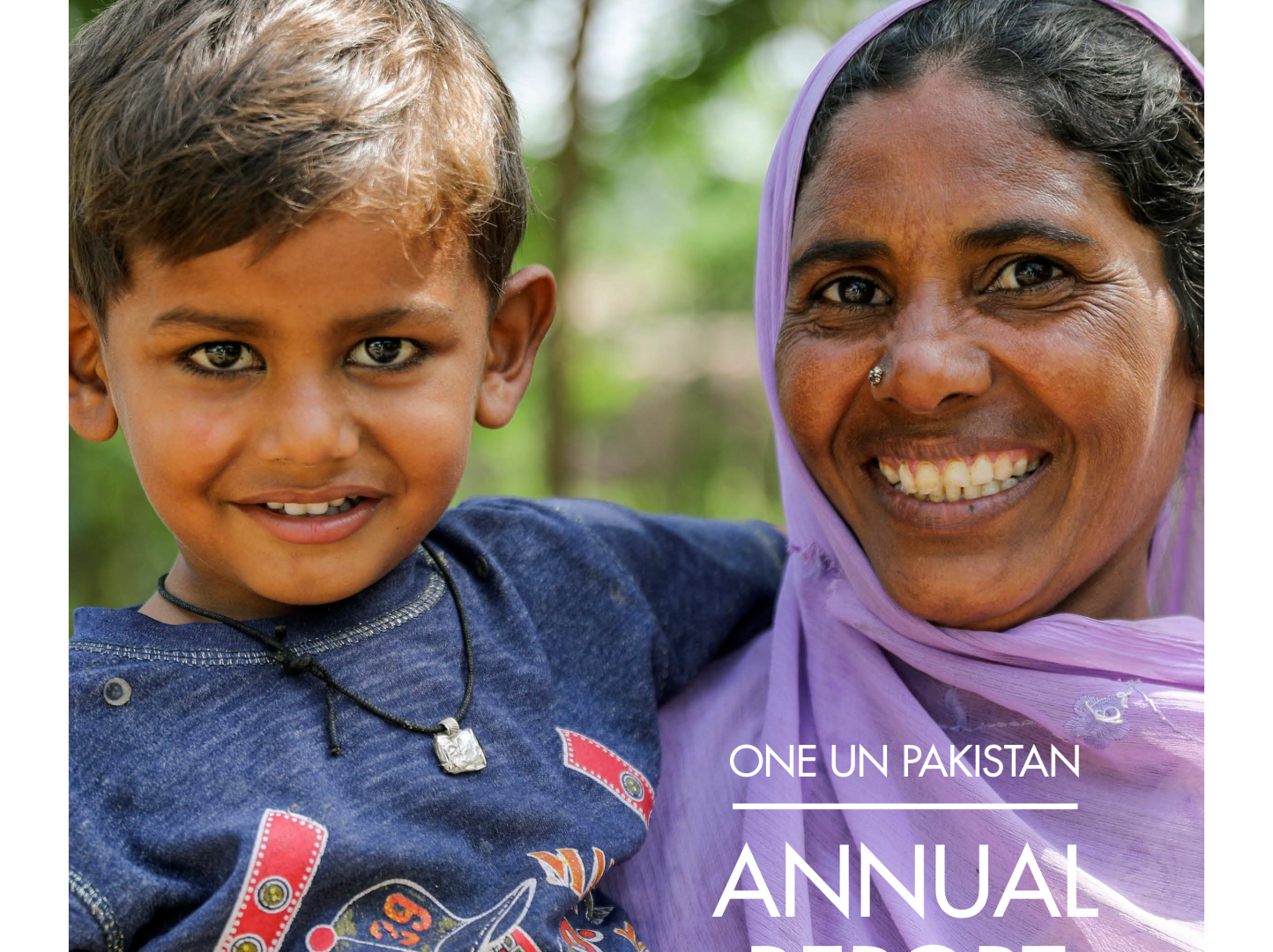
Annual Report 2024
This annual report is proof positive that development works. It shows how the UN in Pakistan, together with our many partners, changed lives for the better in 2024. In words, numbers and images, this report outlines how our solutions for sustainable development sought to deliver the greatest impact for people in the greatest need.
1 of 5

Publication
15 January 2026
UNCT Pakistan Gender Strategy : 2025 – 2027
The UNCT Gender Strategy is a testament to the UN’s commitment to gender equality, equity and empowerment. It is aligned with the UN’s global mandate while, at the same time, tailored to respond to local needs. It has been developed by the Gender Theme Group (GTG), co-chaired by UNFPA and UN Women, with consultation, collaboration and input from all the UN agencies, funds and programmes working in Pakistan.
1 of 5

Publication
08 November 2022
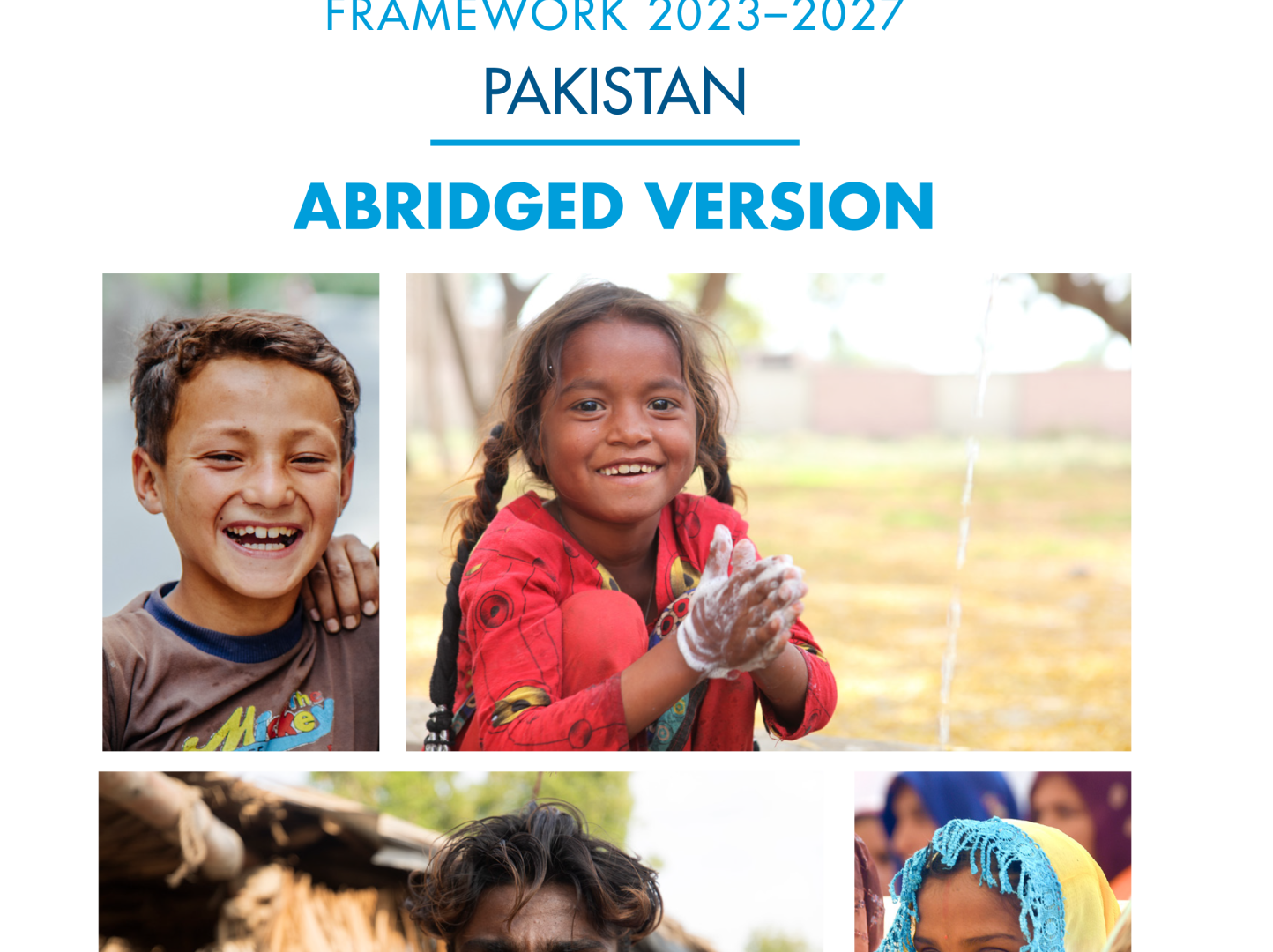
United Nations Sustainable Development Cooperation Framework (UNSDCF) 2023-2027 for Pakistan
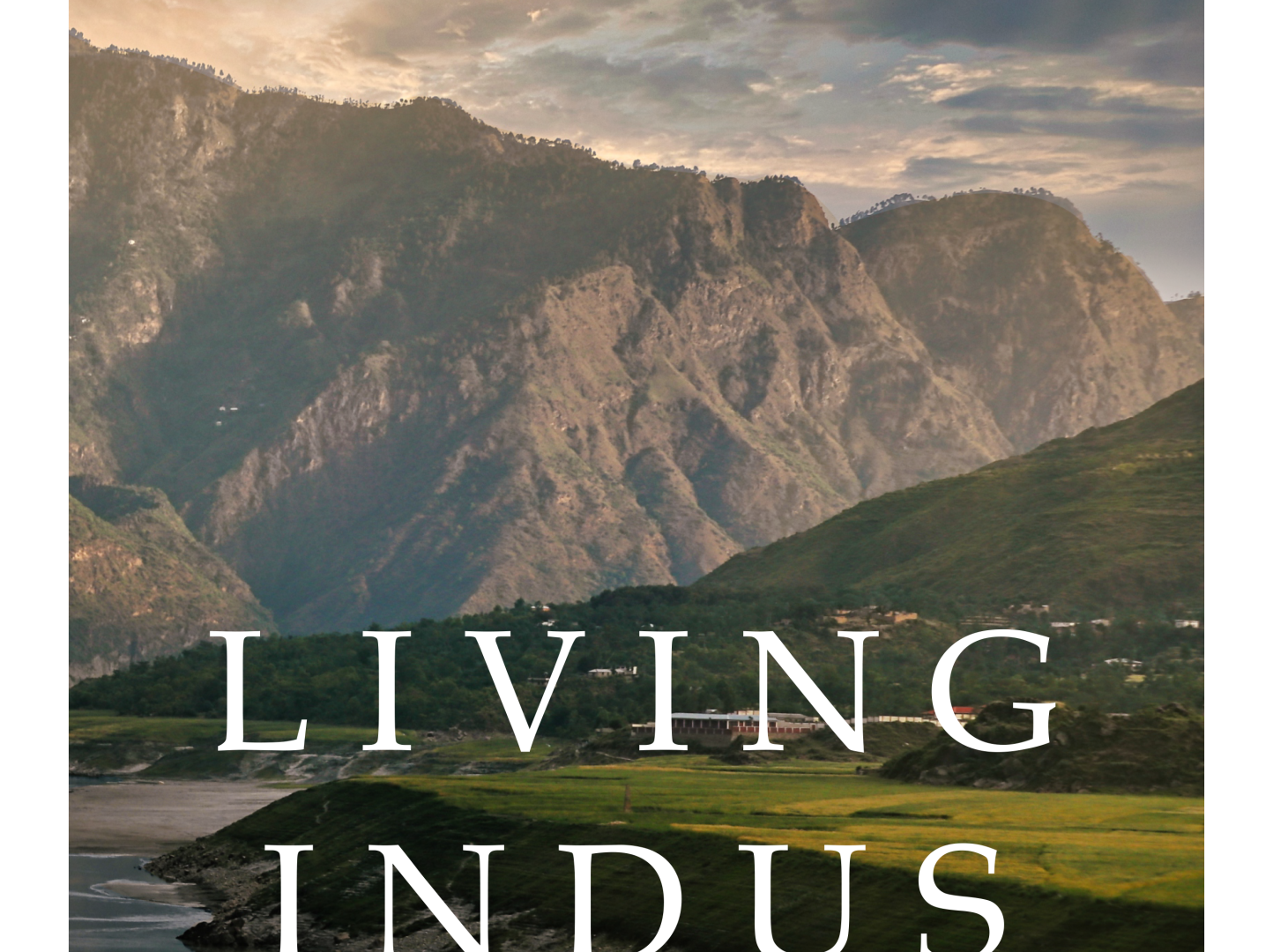
With this framework, the UN in Pakistan has prioritized five development outcomes to improve people’s lives in Pakistan, especially the lives of those at the greatest risk of being left behind. The UN will support Pakistan to move forward on its pathway towards sustainable development, on the understanding that:✓ If basic social services – including health, nutrition, water, sanitation and hygiene (WASH), education and social protection – are strengthened, there will be increased equal access to sustainable quality services for all.✓ If women, girls and transgender persons are empowered to reach their fullest potential, their human, social, economic and cultural rights will be fully protected and upheld, and they will have decision-making power over all aspects of their lives.✓ If the health of the Indus River Basin is restored and protected, and resources are equitably and efficiently used, the Indus will sustain a thriving civilization from its sources to the sea, and Pakistan will be much better equipped to adapt to climate change and mitigate its impact.✓ If there is sustainable and inclusive green economic growth and decent work, there will be equitable employment opportunities, enhanced productivity, a sustainable business environment and the realization of workers’ rights.✓ If inclusive, accountable and efficient governance systems are in place, they will provide equitable service delivery, affordable and accessible justice systems, and enable people to be aware of – and obtain – their rights.To download an abridged version: Click here
1 of 5
Publication
19 March 2025
CCA 2024 Update: CLIMATE FINANCING AND POLICY RECOMMENDATIONS
The UN Common Country Analysis (CCA) 2024 Update provides a comprehensive examination of Pakistan’s climate financing needs, challenges, and opportunities. With climate change posing an existential threat, the report highlights a staggering $348 billion financing gap required for mitigation and adaptation efforts by 2030.Despite being among the top 10 countries most vulnerable to climate change, Pakistan lags behind in international climate finance accessibility, with domestic private sector contributions remaining particularly low. The report identifies key barriers, including limited institutional capacity, slow disbursement rates, and reliance on debt-based climate finance, which further strain the country’s economic resilience.To address these gaps, the policy brief outlines strategic recommendations such as:· Developing a mid-term climate financing strategy,· Expanding domestic and international financing sources,· Enhancing governance frameworks, and· Strengthening disaster risk financing mechanisms.With climate inaction costs projected to reach $1.2 trillion by 2050, urgent and coordinated efforts are required from policymakers, financial institutions, and development partners to drive Pakistan’s transition toward sustainable and climate-resilient growth.
1 of 5
Publication
19 March 2025
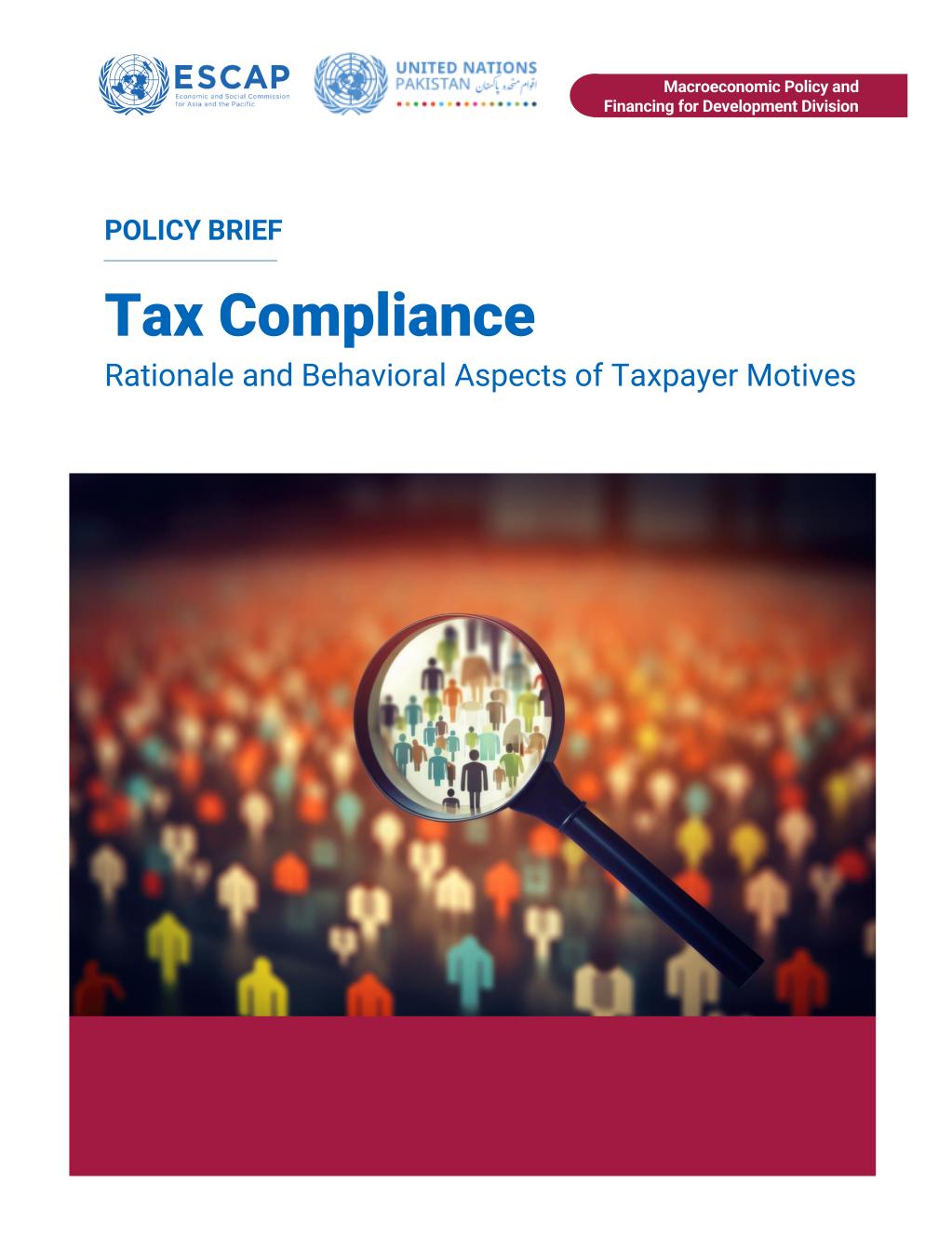
Tax Compliance: Rationale and Behavioral Aspects of Taxpayer Motives (Zheng Hian and Shah Muhammad Azhar)
The objective of this policy brief is to provide an easy-to-digest overview of the factors affecting tax compliance in developing countries, including taxpayer motives at the micro level (Section II) and determinants of national tax capacities at the macro level (Section III), as well as a summary of policy options based on the discussion (Section IV). Section V describes the tax situation in Pakistan and discusses the main messages and insights of the policy brief for Pakistan.
1 of 5
Story
09 January 2026
Against the odds: Pakistan's health heroes protecting girls from cervical cancer
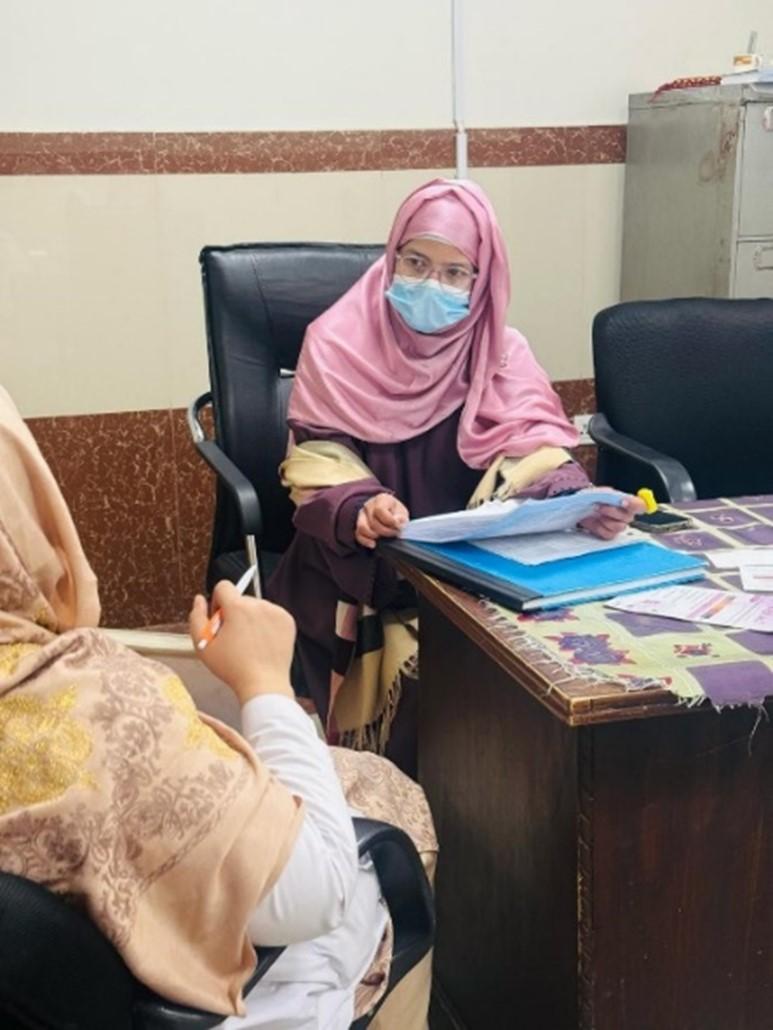
Riffat, Saira, Shaheen, and Naheed are 4 of the 49 000 health workers trained with support from the World Health Organization (WHO) who implemented Pakistan's first-ever human papillomavirus (HPV) vaccination campaign to prevent cervical cancer in 2025, protecting over 9.6 million girls aged 9–14 years.As we mark cervical cancer awareness month, we celebrate their stories and their crucial contributions to the fight against a preventable disease that every year affects over 5000 women in Pakistan – killing 3200 of them (64%).By battling a disinformation storm to protect millions of girls and their future families, these frontline workers achieved a historic milestone in the nation’s public health journey. They became the heroes paving the way towards ending cervical cancer for millions of women.Riffat Naz: the planner who rewrote the planRiffat Naz, UCMO using the community map to discuss with her team members the number of girls to be vaccinated in each area and school. Photo credit: Ayesha Javed/ WHO Pakistan"Every single girl on our list is a daughter, a sister, a future leader. Our planning must be flawless to protect every one of them,” sayd Riffat Naz, a Union Council Medical Officer (UCMO) in Islamabad before the campaign began. Her team spent months conducting meticulous microplanning, creating maps and data sheets for a campaign largely focused on schools.However, reality quickly tested these plans. Riffat’s teams faced unexpected reluctance from school administrations and a high number of parents who, influenced by online misinformation, refused to provide consent. When school-based coverage remained significantly low, Riffat had to change the approach. Her new strategy focused on reaching girls outside the classroom, redeploying teams to reassure parents at their doorstep and covering out-of-school girls in communities and nomadic settlements. “Our initial plans were challenged daily, but with the support of government authorities we were able to adapt”.Saira Hassan: the social mobilizer on the frontline of misinformationSaira responds to mothers' questions during a community engagement session. Photo credit: WHO PakistanAs the campaign shifted from schools to households, the role of social mobilizers like Saira Hassan became even more critical. Her task was to counter misinformation circulating online by answering questions from parents and providing science-based facts to show that the WHO-prequalified vaccine is safe, life-saving, and effective, and has been successfully used in 150 countries – including Muslim countries – to protect girls from cervical cancer.“When I speak to a mother, I tell her this vaccine is safe and free, and is for the health of her daughter,” says Saira. With 7 years of experience, she used the trust built in her community to patiently counter the myths. This personal commitment was mirrored by staff at WHO, who vaccinated their own daughters and shared these moments on social media, creating a powerful, unified front against misinformation.Shaheen Akhter and Naheed Akhter: a team reassuring parents amidst doubtHealth workers Naheed and Shaheen during a training facilitated by WHO Pakistan. Photo credit: Hamid Inam/WHO Pakistan.For vaccinator Shaheen Akhter, being part of this historic first campaign was an honor. The intensive training supported by WHO had prepared her for the job. But the real test came in the field, where she and her team assistant, Naheed Akhter, faced parents filled with fear and doubt.While Shaheen focused on the vaccine, Naheed provided reassurance to parents and girls. “My job is to make sure everyone feels safe and cared for. A kind word and a smile can make all the difference,” Naheed says. Her reassuring presence was vital in calming anxious families. “I see my own daughters in the faces of these young girls,” she says.A new conversation, a ray of hopeTogether, Riffat, Saira, Shaheen, and Naheed represent the thousands of health workers who made the first vaccination campaign in Pakistan to prevent cervical cancer possible. While the 66% coverage rate achieved indicates that there is still work to be done, a ray of hope has emerged from the challenges. The campaign’s frontline workers have ignited a nationwide conversation on ending the public health threat of cervical cancer for millions of girls. Written by: Ayesha Javed - WHO Pakistan Edited by: José Ignacio Martín Galán - WHO Pakistan
1 of 5

Story
24 April 2025
Laila’s journey: crossing rivers and fields to vaccinate every child
“Children should complete their vaccinations, no matter where they live. To reach these locations, we travel on foot, often crossing fields. Sometimes we use a boat to cross rivers to ensure that no child misses a vaccination.” In the scorching heat of Ghazi Kot – a remote area of Muzaffargarh district – navigating the waters of the Indus River in a small boat, 24-year-old Laila Ashiq embarks with her vaccine carrier on a heroic mission to vaccinate every child and pregnant woman against preventable diseases, leaving no one behind. As one of only 12 female vaccinators in the district, Laila's commitment to her community of 60 000 individuals goes beyond her role as vaccinator for the Expanded Programme on Immunization (EPI) in Pakistan, a collaborative initiative supported by the World Health Organization (WHO). “When children are vaccinated, they stay healthy, contributing to a healthier society and helping to brighten the future of Pakistan,” says Laila. Laila, who lost her mother in 2021 and supports her 2 younger sisters while her father works as a ticket collector, embodies resilience and determination. Twice a week, Laila travels 25–30 km along a treacherous river route to reach hard-to-access villages. Driven by her unwavering belief that every life matters, Laila vaccinates women and children and educates mothers on the importance of regular vaccination and preventive care, helping to ensure that their children grow up healthy. "Vaccination is not just a choice, it's a responsibility that we share for the well-being of the children of our community. Through outreach and awareness-raising efforts, vaccinators transform indifference into a commitment to protect our children from preventable diseases like tetanus and measles”, says Laila. Laila vaccinates children against 12 fatal diseases including childhood tuberculosis, polio, diarrhoea, pneumonia, diphtheria, pertussis (whooping cough), tetanus, haemophilus influenzae type b, meningitis, typhoid, measles and rubella. “I felt relieved after the completion of the vaccination course for my son, knowing my child is protected now. For this I am grateful to Laila who not only informed me about the benefits of vaccination but also ensured I stayed on track with each dose,” said Rabia Bibi, mother of 3 children and a resident of Daddoo Mor village in Ghazikot.Laila’s dedication to outreach activities in geographically challenging regions is a testament to her commitment to improving health care services in the community. For her, having access to vaccinations is not a privilege, but a human right. “I believe that health is a fundamental right for every child, and this right cannot be taken away from them. Their vaccinations should be completed, no matter where they live.”
1 of 5

Story
24 April 2025
Pakistan: the women heroes of polio eradication
From vaccination campaigns to disease surveillance, women are at the forefront of the fight against polio across Pakistan, defying challenges, overcoming social norms, building trust and protecting the most vulnerable children from this lifelong paralytic disease. They are leading the way to run the last mile and end the global threat of polio.They are people like Ayesha Raza, a polio survivor who earned global recognition in 2024 for her dedication to fight this deadly disease, Bakht Roza and Basmina – who reach nomadic children in the harsh terrain of southern Khyber Pakhtunkhwa – and Dr Sarwat Wajahat Sheikh, whose efforts were recently recognized by the Government of Sindh. Ayesha, the polio survivor protecting Pakistani children from disability “It’s not easy for me to walk during polio campaigns due to my limited mobility, but I cannot miss the chance to bring hope and resilience to the children of Pakistan.”Polio eradication is a personal mission for Ayesha Raza, a Pakistani polio survivor and health worker whose remarkable commitment earned her global recognition at the Golden Jubilee Ceremony of the Islamic Development Bank – a polio eradication donor – which took place in Saudi Arabia in 2024.Every year, Ayesha is one of 400 000 vaccinators who go door-to-door to implement massive Government-led vaccination campaigns, supported by the World Health Organization (WHO) and partners, to protect over 45 million children against paralytic polio in Pakistan. Ayesha was 2 years old when she contracted polio in the 1990s, at a time when Pakistan did not have a dedicated polio programme. Since then, vaccinators like Ayesha have reduced the number of polio cases by 99.7%. With her left leg paralyzed and difficulty walking, Ayesha’s childhood was challenging. But she refused to let disability define her. She turned to a career as a health worker and also volunteered for the Pakistan Polio Eradication Programme.Ayesha works as a vaccinator and social mobilizer in Lahore, convincing hesitant parents to vaccinate their children to protect them from lifelong disability. “I eagerly await the day when polio is completely eradicated, bringing a brighter future for our nation and the world,” she says.Brave women on motorbikes to reach nomad children In the rough mountainous terrain of Lakki Marwat, two brave Pashtun women, Bakht Roza and Basmina navigate remote, security-compromised areas on motorbikes to vaccinate children against 12 deadly diseases, including polio. Working in Bettani subdivision, where health services are scarce, they are the sole source of essential immunization for children and expectant mothers.Deployed under the Nomads Vaccination Initiative – launched in 2022 to vaccinate nomadic children who often miss polio and routine vaccinations due to frequent movement – Bakht Roza and Basmina travel long distances and overcome cultural barriers to protect children from terrible diseases. They have vaccinated nearly 2800 children, convinced over 200 refusal families to accept immunization, and administered tetanus vaccinations for pregnant women who had not received vaccinations at the local health facility because only a male vaccinator was available. Braving harsh terrain, falls from bikes and community resistance, they remain steadfast. “We think of all the children in the community who need our help as our own children and that motivates us to keep going,” says Bakht Roza.Their story is a testament to the resilience and dedication of female vaccinators who ensure that every child has the chance for a healthy future. WHO Disease Surveillance Officer Recognized for Breakthrough Case Detection “As a public health worker, a polio-free Pakistan is my highest priority and a dream to realize.”Making Pakistan polio-free is a priority for Dr Sarwat Wajahat Sheikh, a WHO Disease Surveillance Officer in Karachi’s Malir district. Her hard work and exceptional commitment to identifying and investigating polio cases in her district was recognized by the Government of Sindh on World Polio Day 2024. In 2017, Dr Sarwat joined WHO in Sindh’s Dadu district where she played a key role in strengthening poliovirus and vaccine-preventable disease surveillance. In 2021, she was transferred to Karachi where the dense population, frequent migration and pockets of vaccine resistance, especially in underserved communities, make poliovirus circulation a persistent challenge. In Karachi Dr Sarwat contributed to expanding the number of surveillance sites from 43 to 93 and mobilized 152 community informants to improve polio case detection. In 2024, she faced one of her toughest cases in Ibrahim Hyderi, a slum community of labourers and fishermen, where a child – suspected of having polio – had unfortunately passed away. The family was hesitant to cooperate with the Pakistan Polio Programme’s case investigation teams. Undeterred, Dr Sarwat spent weeks building trust with the parents, ultimately convincing them to let the teams collect stool samples from other children in the family to rule out polio. Her efforts led to confirmation of the first polio case in the area in 10 years, triggering an urgent vaccination response to protect all children in the community. Dr Sarwat’s work earned her special recognition from the Government of Sindh. “Disease surveillance is a powerful tool to level the playing field, to bend the arc of our country away from poliovirus and towards a polio-free Pakistan”.
1 of 5

Story
24 April 2025
Fatima: crossing deserts to protect mothers and newborns in Pakistan
"Fatima is not just a health worker. She is an angel who brought light back into my life."The words are Maloka’s, a young mother from a remote village in Tharparkar, Sindh province, who lost her first child to neonatal tetanus. When Maloka became pregnant again, Fatima, a Lady Health Worker, vaccinated her against tetanus, ensuring that both the mother and newborn would be protected.Maloka’s story highlights how the Government of Pakistan, in partnership with the World Health Organization (WHO), has transformed the prevention of maternal neonatal tetanus (MNT) across the country. Around 80% ofPakistan’s population (190 million people) now live in areas where the spread of neonatal tetanus is under controlled limits – less than 1 case of tetanus per 1000 live births. Islamabad Capital Territory and Pakistan-administered Kashmir achieved elimination in March 2025, Sindh in December 2024 and Punjab in 2016.Fatima, Maloka’s “angel”, is one of 17 000 Lady Health Workers deployed in the province of Sindh, and 30 000 across the country. For mothers like Maloka, Lady Health Workers are heroes, but they do not work alone. More than 140 000 Lady Health Visitors, Lady Health Supervisors, Lady Health Workers and midwives work across Pakistan, covering even the most remote areas, keeping mothers and newborns safe. Maloka lost her first child, a baby girl, to neonatal tetanus. The pain of that loss fueled her determination to protect any future children. When Maloka became pregnant again, Fatima was there, a steady source of support and guidance. She ensured Maloka received the necessary tetanus vaccinations, advised her on safe delivery practices and provided antenatal care. Today, Maloka cradles her healthy 1-year-old son, a symbol of hope and resilience. Maloka's story underscores the crucial role of frontline health workers like Fatima who provide advice from mother to mother. Fatima acts as a bridge between communities and the health care system, building trust and empowering women to take control of their health. Despite progress, Pakistan remains among 10 countries worldwide that have yet to eliminate MNT. In 2024, a total of 322 cases and 6 deaths were reported across the country, though WHO experts estimate that only 30% of cases are notified to the authorities. WHO will continue to partner with Pakistan and its frontline health workers as they work to eliminate MNT from the country and protect future generations from this preventable disease. As the sun sets over the Thar desert, casting long shadows across the sand dunes, health workers like Fatima are bringing hope for a healthier future to the most remote settlements. “Initially, it was an uphill battle,” Fatima recalls. “Many were hesitant, bound by traditional beliefs and misconceptions about vaccines. Now, the smiles of healthy babies and the relief in mothers' eyes are the greatest reward. It is a reminder that, even in the most challenging circumstances, we can make a difference, one vaccine at a time.”
1 of 5

Story
03 April 2025
Jalwa: fighting tuberculosis on Pakistan’s frontlines
"I am thankful to WHO for providing me with a platform from which I can utilize my abilities to work for the welfare of my people.”Jalwa Ali works for the World Health Organization (WHO) in Pakistan, supporting the provision of services to people affected by tuberculosis (TB) at the Women & Children Hospital Rajjar Charsadda in Khyber Pakhtunkhwa Province. Jalwa works on the frontlines visiting patients, raising awareness, gaining the trust of female patients and communities, addressing misconceptions and reducing the stigma associated with the disease. TB affects over 686 000 people and causes 47 000 deaths annually in Pakistan. The country bears 73% of the TB burden in the Eastern Mediterranean Region and is the 5th most affected in the world.TB can have severe consequences for women, especially during their reproductive years and pregnancy. In partnership with WHO, the Provincial and District TB programme and the Reproductive, Maternal and Newborn (RMNCH) programme are working to implement TB screening for antenatal and postpartum women at the Women & Children Hospital Rajjar Charsadda. WHO also supports the use of GeneXpert testing of stool specimens from young children. The hospital serves a population of 1.6 million and provides outpatient services to over 9800 people each month, including pediatrics (4900), gynaecology (4137), pediatric neonatology (419) and general surgery (394). “I am thankful to the doctors and staff at the hospital who helped me in the diagnosis and treatment of TB,” said Fatima, an antenatal patient who visited the hospital with a 4-day cough. After receiving treatment, she delivered normally and is now fully recovered. Pakistan has increased TB notifications and treatment coverage, reaching nearly 495 000 people in 2024 (70% of the affected population), compared with 331 800 people in 2015 (57% of the affected population). Over the last decade, in partnership with WHO, Pakistan has provided diagnosis and treatment services to 3.7 million people affected by TB.Despite progress, diagnosing TB in children and pregnant women remains a challenge due to factors such as a lack of information, stigma and hesitation among affected populations. Jalwa works hard informing women about the importance of being tested for TB, a disease that is curable and preventable. Being from the same area as her patients is her biggest asset. Women feel comfortable sharing their health concerns with her. For Jalwa, fighting tuberculosis forms part of her personal commitment to serve her community.“I am passionate about making a difference in the lives of vulnerable populations, and am particularly interested in fighting tuberculosis because of its impact on marginalized communities. I realized that there is a dearth of awareness about tuberculosis among local communities, leading to misconceptions. Ending tuberculosis is now my life’s mission.”
1 of 5
Press Release
06 February 2026
Media Update: United Nations Pakistan, 5 February 2025
NEW YORK, 4 February 2026 – “UNICEF is increasingly alarmed by reports of a rapid rise in the volume of AI-generated sexualised images circulating, including cases where photographs of children have been manipulated and sexualised.“Deepfakes – images, videos, or audio generated or manipulated with Artificial Intelligence (AI) designed to look real – are increasingly being used to produce sexualised content involving children, including through “nudification,” where AI tools are used to strip or alter clothing in photos to create fabricated nude or sexualised images.“New evidence confirms the scale of this fast-growing threat: In a UNICEF, ECPAT and INTERPOL study* across 11 countries, at least 1.2 million children disclosed having had their images manipulated into sexually explicit deepfakes in the past year. In some countries, this represents 1 in 25 children – the equivalent of one child in a typical classroom.“Children themselves are deeply aware of this risk. In some of the study countries, up to two thirds of children said they worry that AI could be used to create fake sexual images or videos. Levels of concern vary widely between countries, underscoring the urgent need for stronger awareness, prevention, and protection measures.“We must be clear. Sexualised images of children generated or manipulated using AI tools are child sexual abuse material (CSAM). Deepfake abuse is abuse, and there is nothing fake about the harm it causes.“When a child's image or identity is used, that child is directly victimised. Even without an identifiable victim, AI-generated child sexual abuse material normalises the sexual exploitation of children, fuels demand for abusive content and presents significant challenges for law enforcement in identifying and protecting children that need help. “UNICEF strongly welcomes the efforts of those AI developers that are implementing safety-by-design approaches and robust guardrails to prevent misuse of their systems. However, the landscape remains uneven, and too many AI models are not being developed with adequate safeguards. The risks can be compounded when generative AI tools are embedded directly into social media platforms where manipulated images spread rapidly.“UNICEF urgently calls for the following actions to confront the escalating threat of AI-generated child sexual abuse material:All governments expand definitions of child sexual abuse material (CSAM) to include AI-generated content, and criminalise its creation, procurement, possession and distribution. AI developers implement safety-by-design approaches and robust guardrails to prevent misuse of AI models.Digital companies prevent the circulation of AI-generated child sexual abuse material – not merely remove it after the abuse has occurred; and to strengthen content moderation with investment in detection technologies, so such material can be removed immediately – not days after a report by a victim or their representative.“The harm from deepfake abuse is real and urgent. Children cannot wait for the law to catch up.” # # # # # Notes for editors:Read UNICEF’s latest Issue Brief on AI and child sexual abuse and exploitation here.This statement reflects positions outlined in UNICEF's Guidance on AI and Children 3.0 (December 2025).* This new data forms part of Disrupting Harm Phase 2, the second phase of a research project led by UNICEF’s Office of Strategy and Evidence – Innocenti, ECPAT International and INTERPOL, with funding from Safe Online. The project examines how digital technologies facilitate child sexual exploitation and abuse, and generates evidence to help strengthen national systems, policies and responses.As part of this phase, national reports with country‑level findings will be released throughout 2026. The estimates presented here are based on nationally representative household surveys implemented by UNICEF and IPSOS across 11 countries. Each survey included one child aged 12–17 and one parent or caregiver, using a sampling design aimed at achieving full or near‑full national coverage (91–100%). The research was carried out across countries representing diverse regional contexts. Further methodological detail is available at: https://safeonline.global/dh2-research-methods_final-2/ About UNICEF UNICEF, the United Nations agency for children, works to protect the rights of every child, everywhere, especially the most disadvantaged children and in the toughest places to reach. Across more than 190 countries and territories, we do whatever it takes to help children survive, thrive, and fulfil their potential.
For more information about UNICEF and its work, please visit: www.unicef.org Follow UNICEF on X (Twitter), Facebook, Instagram, and YouTube
For more information, please contact:
Iris Bano Romero | UNICEF New York | ibano@unicef.org
For more information about UNICEF and its work, please visit: www.unicef.org Follow UNICEF on X (Twitter), Facebook, Instagram, and YouTube
For more information, please contact:
Iris Bano Romero | UNICEF New York | ibano@unicef.org
1 of 5
Press Release
04 February 2026
Media Update: United Nations Pakistan, 4 February 2026
The following Security Council press statement was issued today by Council President James Kariuki CMG (United Kingdom):The members of the Security Council condemned in the strongest terms the heinous and cowardly terrorist attacks across multiple locations in Balochistan province, Pakistan, on 31st January 2026. This reprehensible act of terrorism resulted in the grievous loss of 48 Pakistani nationals, including 31 civilians. Civilian casualties included five women and three children. The Balochistan Liberation Army (BLA) has claimed responsibility for these terrorist attacks.The members of the Security Council expressed their deepest sympathy and condolences to the families of the victims and to the Government and the people of Pakistan, and wished a speedy and full recovery to those who were injured.The members of the Security Council reaffirmed that terrorism in all its forms and manifestations constitutes one of the most serious threats to international peace and security.The members of the Security Council underlined the need to hold perpetrators, organizers, financiers and sponsors of these reprehensible acts of terrorism accountable and bring them to justice. They urged all States, in accordance with their obligations under international law and relevant Security Council resolutions, to cooperate actively with the Government of Pakistan in this regard.The members of the Security Council reiterated that any acts of terrorism are criminal and unjustifiable, regardless of their motivation, wherever, whenever and by whomsoever committed. They reaffirmed the need for all States to combat by all means, in accordance with the Charter of the United Nations and other obligations under international law, including international human rights law, international refugee law and international humanitarian law, threats to international peace and security caused by terrorist acts.3 February 2026 *****Office of the Spokesperson for the Secretary-GeneralUnited Nations T: +1 212 963 7160New York, USA www.un.org/sg/en/spokesperson
1 of 5
Press Release
26 January 2026
Media Update: United Nations Pakistan, 22 January 2026
ILOPRESS RELEASENational Workshop Advances Dialogue on Fair Recruitment in PakistanStrengthening fair recruitment practices is essential to safeguarding workers’ rights, improving labour migration governance, and ensuring that recruitment processes support decent work outcomes for both workers and employers.ISLAMABAD (ILO News) – Improving oversight of private employment agencies and advancing fair recruitment practices emerged as critical priorities for improving labour migration governance in Pakistan, participants at a national workshop on ILO Convention No. 181 emphasized. Convened by the International Labour Organization (ILO) in collaboration with the Ministry of Overseas Pakistanis and Human Resource Development (MOPHRD), the workshop enabled stakeholders to identify key regulatory and institutional gaps and build momentum for reforms aligned with international labour standards and national priorities.The workshop was organized under the ILO’s project “Enhancing Partners’ Capacity on Decent Work and International Labour Standards for Labour Migration from Pakistan,” within the framework of Centres for Migration and Development (ZME) Pakistan, co-funded by the German Federal Ministry for Economic Cooperation and Development (BMZ) and the European Union (EU).Pakistan is one of South Asia’s major labour-sending countries. According to the Bureau of Emigration and Overseas Employment (BEOE), more than 727,000 Pakistani workers migrated abroad in 2024, primarily to Gulf Cooperation Council (GCC) countries. Since 1971, over 10 million Pakistanis have accessed overseas employment through formal channels, generating billions of dollars in remittances that support economic stability and household resilience.At the same time, labour mobility within Pakistan is extensive, with millions of workers moving across provinces each year through private employment agencies and labour contractors. While these intermediaries play an important role in connecting workers to jobs, weak regulation and uneven oversight expose workers to risks such as excessive recruitment fees, misinformation and unequal treatment, underscoring the need for a more coherent recruitment governance framework across both domestic and international labour marketsGeir Tonstol, Country Director of the ILO in Pakistan, noted that “ILO Convention No. 181, together with the ILO General Principles and Operational Guidelines for Fair Recruitment, offers practical tools to strengthen worker protection, promote transparency, and improve accountability of recruitment intermediaries across labour markets.”Maria-José Poddey, Country Director of GIZ Pakistan, emphasized that “Promoting safe and regular migration remains a shared priority. Germany and the European Union are committed to supporting Pakistan in strengthening regular pathways that are transparent, skills-oriented, and grounded in mutual benefit. This workshop is therefore not a standalone event. It is part of a broader mission to strengthen migration governance and align Pakistan’s systems with international labour standards.”Sohail Khwaja, Joint Secretary Emigration, MOPHRD, stated that “ILO Convention No. 181 on Private Employment Agencies provides an internationally recognized framework to regulate recruitment and placement services across sectors and labour markets. While ratification of an ILO convention is a sovereign national decision, this workshop marks an important first step in a broader advocacy and consultation process to examine the Convention’s provisions, assess regulatory gaps, and explore its relevance within Pakistan’s governance context.”The workshop marked the first step in a broader ILO-led advocacy initiative, supported by German Development Cooperation and the European Union under the GIZ ZME programme, to enhance institutional capacities on decent work and international labour standards in the context of labour migration from Pakistan.Convention No. 181 (C181) is an international labour standard developed by the ILO’s constituents (governments, employers and workers) and adopted at the International Labour Conference. It establishes a comprehensive framework for the registration, licensing and effective regulation of private employment agencies, and for the protection of workers who use their services.For further information please contact:Muhammad NumanCommunication OfficerEmail: numan@ilo.orgMobile: +92 303 5000041
*** UNESCOMedia AdvisoryInternational Day for Education – Open Dialogue on “Shaping Tomorrow: Youth in Action for Better Education”When: Friday, 23rd January 2026, 10:00am – 12:00pmWhere: Islamabad Model College for Girls (IMCG), F-7/4, IslamabadWhat: On the eve of the International Day of Education (24 January), UNESCO, in collaboration with the Federal Directorate of Education (FDE), is commemorating the day by placing youth at the center of the conversation on education’s future under the theme “The Power of Youth in Co-Creating Education.” The celebration will provide a meaningful platform to engage students and young people as active partners in shaping learning opportunities that respond to their aspirations and the rapidly evolving demands of the 21st century. Through dialogue, reflection, and youth-led engagement, UNESCO and FDE reaffirm their shared commitment to empowering young learners as agents of change and advancing SDG 4 by promoting inclusive, equitable, and quality education for all.Who: Adults, teachers, government officials and development partnersProgramme Agenda:10:00 to 10:05 AMRecitation from the Holy Quran10:05 to 10:15 AMWelcome remarks by the College Principal10:15 to 10:25 AMAddress by UNESCO Country Representative10:25 to 10:35 AMAddress by Ministry of Federal Education and Professional Training10:35 to 11:05 AMOpen interactive Dialogue with students - “Shaping Tomorrow: Youth in Action for Better Education” led by Minister of State for Ministry of Federal Education and Professional Training.10:05 to 11:35 PMPerformance by Students11:35 to 11:50 AMSouvenirs Distribution11:50 to 12:00 PMClosing remarks by Federal Directorate of Schools Note to the Media Participants: You are kindly requested to assign a reporter/cameraperson to cover the event.For RSVP please contact: Zahra Sohail, Cell: 0309 099 3005, Email: z.sohail@unesco.org We look forward to your participation and coverage.
*** UNESCOMedia AdvisoryInternational Day for Education – Open Dialogue on “Shaping Tomorrow: Youth in Action for Better Education”When: Friday, 23rd January 2026, 10:00am – 12:00pmWhere: Islamabad Model College for Girls (IMCG), F-7/4, IslamabadWhat: On the eve of the International Day of Education (24 January), UNESCO, in collaboration with the Federal Directorate of Education (FDE), is commemorating the day by placing youth at the center of the conversation on education’s future under the theme “The Power of Youth in Co-Creating Education.” The celebration will provide a meaningful platform to engage students and young people as active partners in shaping learning opportunities that respond to their aspirations and the rapidly evolving demands of the 21st century. Through dialogue, reflection, and youth-led engagement, UNESCO and FDE reaffirm their shared commitment to empowering young learners as agents of change and advancing SDG 4 by promoting inclusive, equitable, and quality education for all.Who: Adults, teachers, government officials and development partnersProgramme Agenda:10:00 to 10:05 AMRecitation from the Holy Quran10:05 to 10:15 AMWelcome remarks by the College Principal10:15 to 10:25 AMAddress by UNESCO Country Representative10:25 to 10:35 AMAddress by Ministry of Federal Education and Professional Training10:35 to 11:05 AMOpen interactive Dialogue with students - “Shaping Tomorrow: Youth in Action for Better Education” led by Minister of State for Ministry of Federal Education and Professional Training.10:05 to 11:35 PMPerformance by Students11:35 to 11:50 AMSouvenirs Distribution11:50 to 12:00 PMClosing remarks by Federal Directorate of Schools Note to the Media Participants: You are kindly requested to assign a reporter/cameraperson to cover the event.For RSVP please contact: Zahra Sohail, Cell: 0309 099 3005, Email: z.sohail@unesco.org We look forward to your participation and coverage.
1 of 5
Press Release
26 January 2026
Media Update: United Nations Pakistan, 23 January 2026
When: Friday, 26-29 January 2026Where: Peshawar, PakistanWhat: The United Nations Educational, Scientific and Cultural Organization (UNESCO), in collaboration with Pakistan’s Department of Archaeology and Museums (DOAM) and provincial heritage authorities, is organizing a national workshop on World Heritage Site Management, Documentation, and Boundary Delineation from 26 to 29 January 2026 in Peshawar, Khyber Pakhtunkhwa. The four-day programme will bring together site managers from all six inscribed World Heritage properties, along with federal and provincial officials and heritage professionals. Through expert-led sessions and applied group work, participants will strengthen skills related to management planning, documentation, mapping, and buffer zone definition, drawing on both national experience and international expertise.A guided field visit to the World Heritage Site of Takht-i-Bahi will anchor the discussions in practical, site-based realities and encourage peer learning.Who: site managers from all six inscribed World Heritage properties, along with federal and provincial officials and heritage professionalsProgramme Agenda:Provisional AgendaDay One Date: 26 January 2026, MondayVenue: Peshawar MuseumTimeActivityFacilitator09:00 –09:30 AMParticipant Registration and Networking 09:30 –10:00 AMOpening SessionWelcome Address by Abdul Samad, Director General of Archaeology and Museums for Khyber Pakhtunkhwa (KP) Province Opening Remarks by Fuad Pashayev, Head of UNESCO Islamabad Office in Pakistan Opening Remarks by Nicolas Galey, Ambassador of France toPakistan 10:00 –10:15 AMTea Break 10:15 –10:45 AMSession OneObjectives of the WorkshopAnd introduction of participantsJawad Aziz National ProfessionalOfficer-CultureUNESCO Islamabad10:45 AM – 12:45 PM Session TwoPresentations by Site Managers for Each World Heritage SitesEach site manager (20 min. each) will present an overview of the challenges of their respective sites, with a focus on the gaps related to World Heritage Site requirements, such as Management Plans, Buffer Zones, Documentation etc. Cristina Menegazzi International Expert - Culture and Heritage UNESCO Islamabad12:45 –01:45 PMLunch Break 01:45 –03:15 PM Session ThreeWorld Heritage in PakistanAn Historical Overview and Strategy for the Future Tahir SaeedFormer Director Department ofArchaeology andMuseums, Islamabad 03:15 –03:30 PMTea Break 03:30 –05:30 PMSession FourDefining the Heritage PropertyGroup work on World Heritage attributes / value and authenticity Mapping attributes and property boundaries / integrity Kai WeiseUNESCO ConsultantPresident of ICOMOS Nepal Day TwoDate: 27 January, TuesdayVenue: World Heritage Site Takht-i-Bahi andPeshawar MuseumTimeActivityFacilitator07:30 AMDeparture for Takht-i-Bahi from Hotel 09:00 AM – 12:00 PM Session FiveTakht-i-Bahi Site VisitGuided site visit to discuss and understand the needs of a World Heritage Site in situ Led by the Directorate ofArchaeology andMuseums for KhyberPakhtunkhwa (KP)Province 01:30 –02:30 PMLunch Break 02:30 –03:30 PM Session SixDocumentation Requirements for World Heritage SitesMaps, Demarcation, Buffer Zone, Photographs, Management Plans Usman SamiPresident ICOMOS Pakistan03:30 –05:30 PM Session SevenIssues and Actions Group work: Identifying Issues and discussions on management objectivesResponse procedures to issues – presentation and discussions on actionsAction categories and preparing Plan of Actions Usman SamiTahir SaeedKai Weise Day ThreeDate: 28 January 2026, WednesdayVenue: Peshawar MuseumTimeActivityFacilitator09:00 –11:00 AM Session EightManagement FrameworksGroup work on Institutions and Legal Framework and discussionsGroup work on Resources Framework and discussionsAdditional management tools – presentations and discussions Usman SamiTahir SaeedKai Weise 11:00 –11:15 AMTea Break 11:15 –01:15 PM Session NineApproaches and Sector StrategiesDiscussions on vision and approachesCategorization of issues and sector strategiesPreparing, finalizing and adopting the Management Document Usman SamiTahir SaeedKai Weise 01:15 –02:15 PMLunch Break 02:15 –04:00 PM Session TenRoles, Structures, Procedures and Challenges of Provincial and FederalDepartments of Archaeology & Museums Usman SamiTahir SaeedKai Weise 04:00 –05:30 PMSession ElevenRoles & Responsibilities of Stakeholders and Site Managers for World Heritage Sites Usman SamiTahir SaeedKai Weise 08:00 –10:00 PMNetworking Dinner Day FourDate: 29 January 2026, ThursdayVenue: Peshawar MuseumTimeActivityFacilitator09:00 –11:00 AM Session TwelveWorld Heritage Strategy for PakistanPresentation by DOAM on the need for an effective WorldHeritage Strategy for PakistanGuided discussion among all participants on the revision of theTentative List Cristina Menegazzi 11:00 –11:15 AMTea Break 11:15 –01:00 PM Session ThirteenFuture Nominations PlansEach provincial director/director-general will present an overview of the nomination plan for the next ten years for the World Heritage Site List in Pakistan Jawad Aziz 01:00 –02:00 PMLunch Break 02:00 –03:00 PM Session FourteenRecommendationsDiscussion on Recommendations for Effective Management ofWorld Heritage Sites in Pakistan Cristina Menegazzi 03:00 –03:30 PM Certificates DistributionClosing Session Remarks by Amanullah Director General Department of Archaeology and Museum, IslamabadRemarks by Dr. Abdul Samad Directorate General of Archaeology and Museums, Khyber Pakhtunkhwa Closing Remarks by UNESCO Representative Jawad Aziz 03:30 –04:30 PMTea & Departure of Participants Note to the Media Participants:You are kindly requested to assign a reporter/cameraperson to cover the event.For RSVP please contact:Zahra Sohail, Cell: 0309 099 3005, Email: z.sohail@unesco.orgWe look forward to your participation and coverage.
1 of 5
Press Release
22 January 2026
Media Update: United Nations Pakistan, 21 January 2026
Rotary International’s grant will enable part of the World Health Organization’s operations, in partnership with the Pakistan-led Polio Eradication Initiative, to protect over 45 million children against the global threat of paralytic polio in 2026.21 January 2026 – Islamabad, Pakistan – Rotary International has provided a grant of US$ 9.9 million to the World Health Organization (WHO) in Pakistan to support the vaccination of 27 million children against polio in high-risk districts. This partnership will reinforce the operations of the Government of Pakistan-led Polio Eradication Initiative, which conducts multiple nationwide door-to-door campaigns and subnational drives each year, reaching over 45 million children.Rotary is a founding member of the Global Polio Eradication Initiative (GPEI) – a public-private partnership to eradicate polio worldwide led by national governments with six partners: WHO, Rotary International, the US Centers for Disease Control and Prevention, UNICEF, Gates Foundation and Gavi, the Vaccine Alliance.Since the launch of Pakistan’s Polio Eradication Initiative three decades ago, Pakistan has reduced polio cases by 99.8% – from 20,000 cases in 1994 to 31 cases in 2025.Globally, since 1988, the GPEI has brought down polio cases by 99.9%. As of today, wild poliovirus type 1 remains endemic only in two countries: Afghanistan and Pakistan.To date, Rotary has contributed US$ 3 billion to global polio eradication efforts and nearly US$ 500 million to Pakistan, along with high-level advocacy and countless volunteer hours.“Rotary’s support is the best example of how a partnership can protect millions of lives. WHO extends its deepest appreciation to Rotary for its continuing support as a founding partner of the Global Polio Eradication Initiative. Rotary’s long-standing commitment is crucial in our journey towards a polio-free world,” said WHO Representative in Pakistan Dr Luo Dapeng. “Science indicates that ending polio in Pakistan and worldwide is within reach if we sustain the ongoing partnership and eradication efforts. However, the detection of wild poliovirus type 1 in Germany last November is a strong reminder that the cost of inaction would be far greater than the cost of action, since no country and no child will be safe until the virus is fully eradicated everywhere.”The grant to WHO Pakistan is part of a larger US$ 14.9 million contribution to overall polio eradication efforts in Pakistan. With these funds, WHO will support polio immunization in high-risk districts of Balochistan, Sindh, Khyber Pakhtunkhwa and Punjab. The funds will be allocated to campaign operations, including human resources and incentives, training, transportation, supplies for frontline workers, vaccine carriers, and operational costs. ***For additional information, please contact:José Ignacio Martín Galán, Head of Communications, WHO Pakistan: jomartin@who.intMaryam Yunus, National Professional Officer – Communications, WHO Pakistan: yunusm@who.intAbout WHO: Founded in 1948, WHO is the United Nations agency that connects nations, partners and people to promote health, keep the world safe and serve the vulnerable. We work with 194 Member States across more than 150 locations to ensure everyone, everywhere, can attain the highest level of health. WHO has been active in Pakistan since 1960. For more information, visit https://www.emro.who.int/countries/pak/index.html.
1 of 5
Latest Resources
1 / 11


Resources
08 November 2022
1 / 11
